

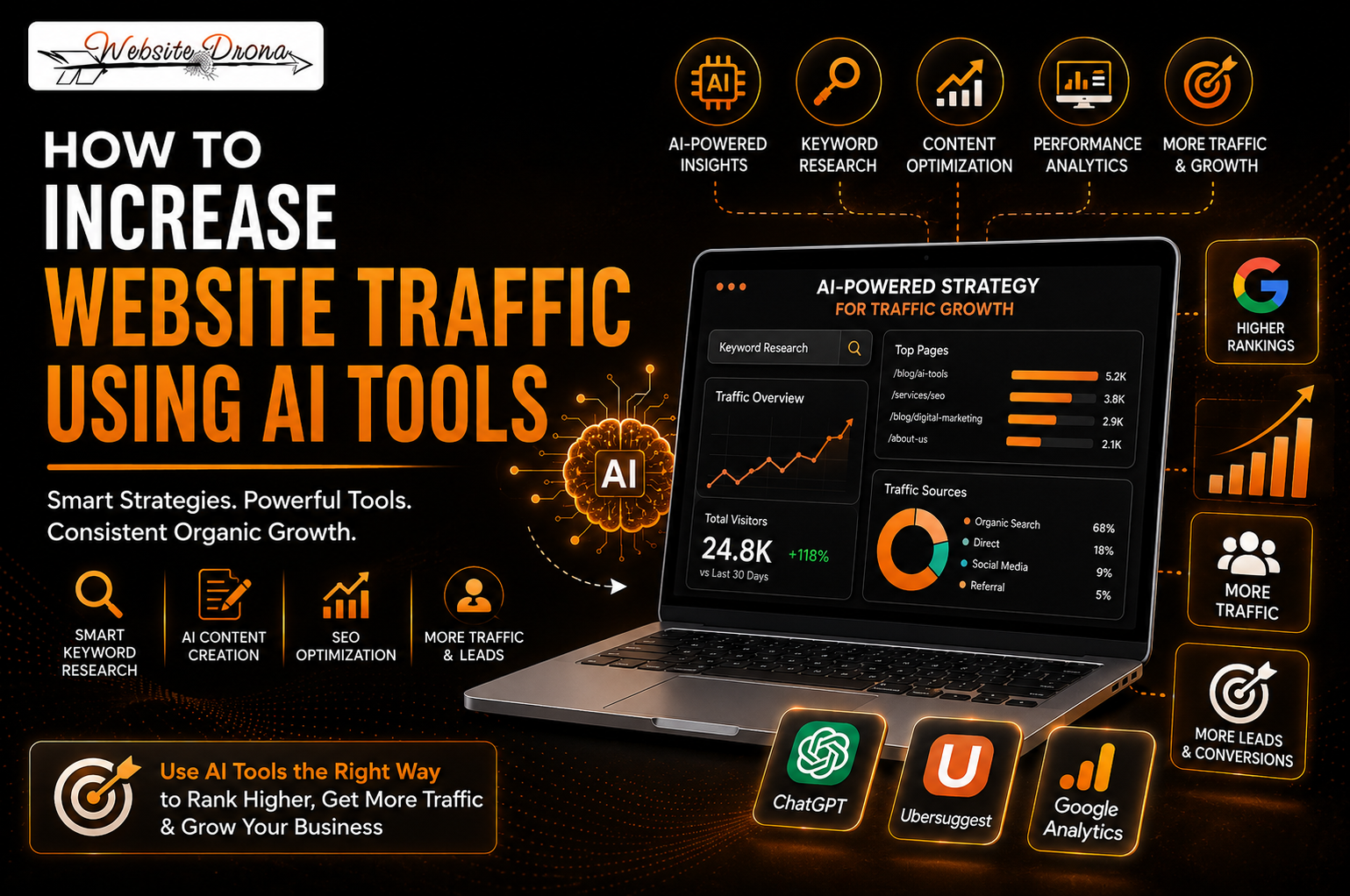
Most websites struggle to attract traffic, not because of weak design but because they lack a well-planned, structured strategy. In 2026, competition on search engines has grown rapidly, and publishing content alone is no longer sufficient to bring consistent visitors.
Search engines like Google prioritize websites that:
- Match user intent
- Provide valuable and relevant content
- Deliver a smooth user experience
This is exactly where Artificial Intelligence (AI) becomes extremely important.
AI tools enable businesses to shift from assumptions to data-backed decision-making. Rather than manually studying trends, you can now:
- Discover high-potential keywords
- Create optimized content faster
- Improve SEO performance
- Analyze user behavior accurately
However, one thing is important to understand:
AI tools are not meant to replace strategy — they enhance and support it.
In this guide, you will learn how to use AI tools effectively to increase website traffic, improve rankings, and generate consistent organic growth.
Understanding AI Tools in Digital Marketing
AI tools work on data models and algorithms to automate processes and deliver insights that support better decisions.
Tools like ChatGPT and Ubersuggest are commonly used for:
- Content generation
- Keyword discovery
- SEO optimization
- Competitor research
Instead of spending time manually analyzing large datasets, AI systems process them instantly and generate useful, actionable results. This improves both speed and accuracy.
The biggest advantage of AI tools is that they allow you to focus more on strategy and execution instead of repetitive manual work.
Why AI Is Important for Website Traffic Growth
Faster and Consistent Content Production
Search engines prefer websites that maintain a consistent content publishing schedule. AI tools help maintain consistency by generating structured content quickly.
Instead of spending hours planning a blog, AI can generate:
- Topic ideas
- Content outlines
- Drafts
This allows you to focus on improving quality rather than starting from scratch.
Better Keyword Targeting
Website traffic is highly dependent on selecting the right keywords. AI tools analyze:
- Search demand
- Competition level
- User intent
This helps you choose keywords that are easier to rank and more relevant to your audience.
For example, targeting “SEO” is too broad. A better keyword would be:
“SEO strategies for small businesses in India.”
This type of keyword attracts users who are actively looking for solutions.
Data-Based Optimization
AI tools provide insights into:
- Which pages perform well
- Where users drop off
- What type of content attracts engagement
These insights help you continuously refine your strategy rather than relying on assumptions.
Automation and Efficiency
AI automates tasks such as:
- SEO audits
- Meta tag generation
- Content suggestions
This reduces manual effort and allows faster execution.
Key AI Tools for Traffic Growth
Content Creation
- ChatGPT
Used for creating blogs, website content, and marketing copy.
SEO Optimization
- Ubersuggest
Used for keyword research, competitor analysis, and SEO improvements.
Analytics and Tracking
- Google Analytics
- Google Search Console
These tools track traffic, user behavior, and keyword performance.
User Engagement
AI chatbots improve:
- User interaction
- Lead generation
- Conversion rates
Step-by-Step Strategy to Increase Website Traffic Using AI
Step 1: Identify the Right Keywords
Keyword selection determines whether your content will rank.
Use AI tools to:
- Find long-tail keywords
- Identify low-competition topics
- Understand user intent
Instead of targeting generic terms, focus on specific queries that match user needs. This improves both ranking and conversion.
Step 2: Create High-Value Content
Content should be created with a clear focus on solving user problems. AI helps generate drafts, but quality depends on how well you refine them.
Focus on:
- Clear explanations
- Practical solutions
- Structured formatting
Avoid generic content. Each article should provide a clear takeaway for the reader.
Step 3: Optimize On-Page SEO
On-page SEO improves visibility in search engines.
Key elements include:
- Title tags with keywords
- Meta descriptions
- Proper heading structure
- Natural keyword placement
AI tools can suggest improvements, but final optimization should be done carefully to maintain readability.
Step 4: Improve User Experience
User experience directly affects rankings.
Key factors:
- Page loading speed
- Mobile responsiveness
- Easy navigation
- Readable content
If users leave quickly, search engines reduce your rankings. AI tools help identify issues and suggest improvements.
Step 5: Promote Content Effectively
Simply publishing content is not enough — proper promotion is required to generate initial visibility and traffic.
Use platforms like:
AI tools help automate posting schedules and improve consistency.
Advanced AI Strategies for Traffic Growth
Content Personalization
AI enables personalized experiences by showing content based on user behavior. This increases engagement and reduces bounce rate.
Predictive SEO
AI tools analyze trends and predict future search behavior. This allows you to create content before competitors target those keywords.
Voice Search Optimization
With the rise of voice search, users now search using conversational queries. Optimizing content for natural language improves visibility.
AI-Based Testing
Testing different headlines, layouts, and CTAs helps identify what performs best. AI tools simplify this process by analyzing results quickly.
Importance of Backlinks
Backlinks remain one of the most powerful ranking signals in SEO. They signal trust and authority to search engines.
High-quality backlinks:
- Improve rankings
- Increase domain authority
- Drive referral traffic
Effective Backlink Strategies
- Guest posting on relevant websites
- Submitting to business directories
- Outreach to industry blogs
Focus on quality rather than quantity. A few strong backlinks are more valuable than many weak ones.
Tracking and Measuring Performance
Tracking performance is essential for growth.
Use tools like:
- Google Analytics
- Google Search Console
Monitor:
- Traffic sources
- Keyword rankings
- User behavior
This helps you identify what is working and where improvements are needed.
Common Mistakes to Avoid
- Publishing AI content without editing
- Targeting high-competition keywords
- Ignoring user intent
- Creating duplicate or low-value content
- Not updating existing pages
Avoiding these mistakes ensures steady growth.
Timeline for Traffic Growth
Search engine optimization is a time-based process and requires patience.
- 1–2 months → Initial improvements
- 3–6 months → Noticeable growth
- 6+ months → Strong and stable traffic
Long-term consistency matters more than quick results.
Practical Tips for Better Results
- Focus on solving specific problems
- Maintain consistent publishing
- Use internal linking between pages
- Update old content regularly
- Combine AI insights with manual optimization
Conclusion
AI tools have completely transformed how businesses approach website traffic and SEO growth. They simplify complex tasks, provide valuable insights, and help execute strategies more efficiently.
However, tools alone are not enough.
The key to success lies in:
- Choosing the right keywords
- Creating valuable content
- Optimizing SEO properly
- Maintaining consistency
When AI tools are used correctly, they can help you:
- Increase website traffic
- Improve search rankings
- Generate more leads and conversions
Call to Action
Ready to increase your website traffic with AI-powered strategies? Start implementing these techniques today and focus on consistent optimization for long-term growth. For professional website development, SEO, and digital marketing solutions, visit Website Drona and take the next step toward growing your online presence.
Frequently Asked Questions
1. How can AI tools increase website traffic?
AI tools help with keyword research, content creation, SEO optimization, and user behavior analysis to attract more visitors.
2. Which AI tools are best for SEO and traffic growth?
Popular tools include ChatGPT, Ubersuggest, Google Analytics, and Google Search Console.
3. Can AI-generated content rank on Google?
Yes, if the content is original, helpful, optimized, and reviewed by a human before publishing.
4. How long does it take to see SEO results with AI tools?
Most websites see initial improvements in 1–2 months and significant growth within 3–6 months.
5. What mistakes should I avoid when using AI for SEO?
Avoid publishing unedited AI content, targeting highly competitive keywords, and ignoring user intent.